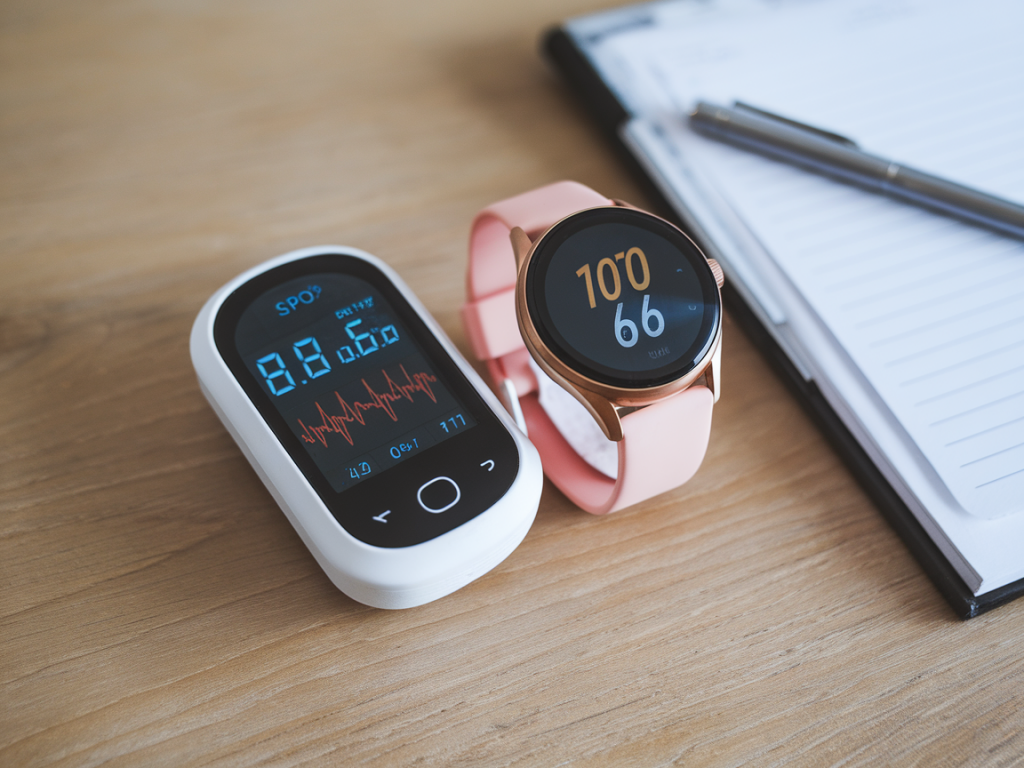
I get asked a lot whether you can cobble together hospital-grade SpO2 monitoring at home with a cheap fingertip pulse oximeter and a budget smartwatch. As someone who spends more time than is strictly healthy testing wearables and measuring accuracy under realistic conditions, I dug into how far that combo can take you — and where it falls short. Below I walk through what each device class actually measures, how they differ from clinical-grade equipment, the scenarios where they’re useful (and where they’re dangerous), and practical tips to improve reliability if you rely on at-home readings.
What pulse oximetry measures — and what “accurate” means
Pulse oximeters estimate arterial oxygen saturation (SpO2) by shining red and infrared light through vascular tissue and measuring the ratio of absorption. That ratio is converted into an SpO2 percentage using algorithms. In hospitals, measurements are made with calibrated, medical-grade sensors, often with multi-wavelength systems and validated against arterial blood gas (ABG) tests.
“Hospital-grade” implies tight tolerances, validated calibration, alarm integration, and often continuous monitoring with fail-safes. Consumer devices aim for a convenient estimate; they can be very good in ideal conditions but typically lack the rigorous calibration and quality controls of clinical systems.
Fingertip pulse oximeters: cheap vs. medical
Cheap fingertip oximeters (the sub-£20 or <$30 units you see everywhere) use the same basic photoplethysmography (PPG) technology as medical devices, and many will provide reasonable SpO2 readings for healthy users at rest. But differences matter:
In practice, a cheap fingertip oximeter can be within 1–3% of a medical unit when you’re resting, warm, and well-perfused. But that error range widens with low perfusion (cold fingers), movement, darker skin tones, nail polish, or cardiac arrhythmias.
Budget smartwatches: what they can and cannot do
Budget smartwatches (think Amazfit, basic models from Huawei/Honor, or some TicWatch/realme offerings) increasingly advertise SpO2. They use reflectance PPG from the wrist — measuring light reflected back from tissues rather than transmitted — which is inherently more challenging for SpO2 than transmission-based fingertip sensors. Common limitations:
Some midrange watches (e.g., recent Fitbit, Garmin, or Apple Watch models) do a very credible job, but that quality typically requires better hardware and more development resources than cheap watches have.
Head-to-head: combining a cheap fingertip oximeter with a budget smartwatch
People often ask whether using both together can “average out” errors and mimic hospital-grade accuracy. In short: it helps for convenience and cross-checking, but it’s not a substitute for clinical-grade monitoring. Here’s why:
Practical testing tips I use in the lab (and at home)
When I test oximeters and watches, I follow simple procedures you can replicate to improve reading reliability:
When at-home readings are actionable
Consumer oximeters are useful in several realistic home-monitoring roles:
However, they are not appropriate for high-stakes clinical decision-making in isolation. If you are on supplemental oxygen, have significant lung disease, or experience symptoms (shortness of breath, chest pain, fainting), seek medical care rather than relying only on consumer readings.
Quick comparison table: what to expect
| Device | Typical accuracy (ideal conditions) | Best use | Limitations |
|---|---|---|---|
| Medical-grade fingertip oximeter | ±1–2% vs ABG | Clinical monitoring, diagnostics | Cost, need for calibration/maintenance |
| Cheap fingertip oximeter | ±2–4% (variable) | Home spot checks, trend tracking | Bias under low perfusion, limited validation |
| Budget smartwatch (wrist reflectance) | ±3–6% (highly variable) | Casual monitoring, wellness tracking | Motion, skin tone, and placement issues |
Which products I’d trust for more reliable home SpO2 monitoring
If you want affordable but more reliable readings, consider these approaches:
In short, a cheap fingertip oximeter plus a budget smartwatch can give you useful information for wellness and trend tracking. They can flag problems and prompt further testing. But they won’t consistently deliver hospital-grade SpO2 accuracy across all conditions. If you need clinical certainty — or if you belong to a high-risk group — invest in validated devices and consult healthcare professionals rather than relying solely on consumer gadgets.